
Card games
Solitaire has been the default way to waste an afternoon on a computer since about 1990, and it earned that. A shuffled deck is a small private problem that always looks worse than it turns out to be. The good part is the untangling: the buried card you finally reach, the column you held open one move longer than felt sensible, the hopeless tableau that quietly becomes winnable.
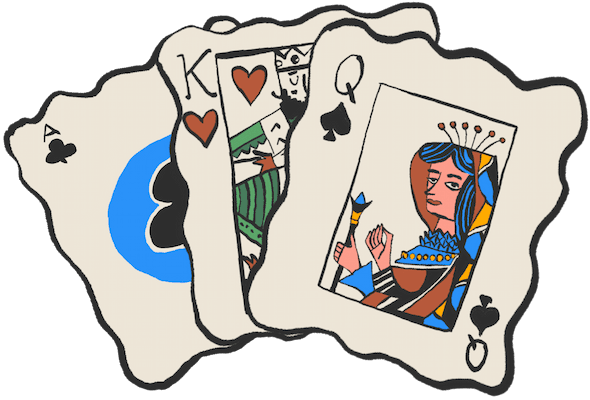
Klondike Solitaire
The solitaire everyone knows, dealt fairly: every daily deal is seeded to have a solution. Build the four foundations from Ace to King; your best time is tracked.
Play free →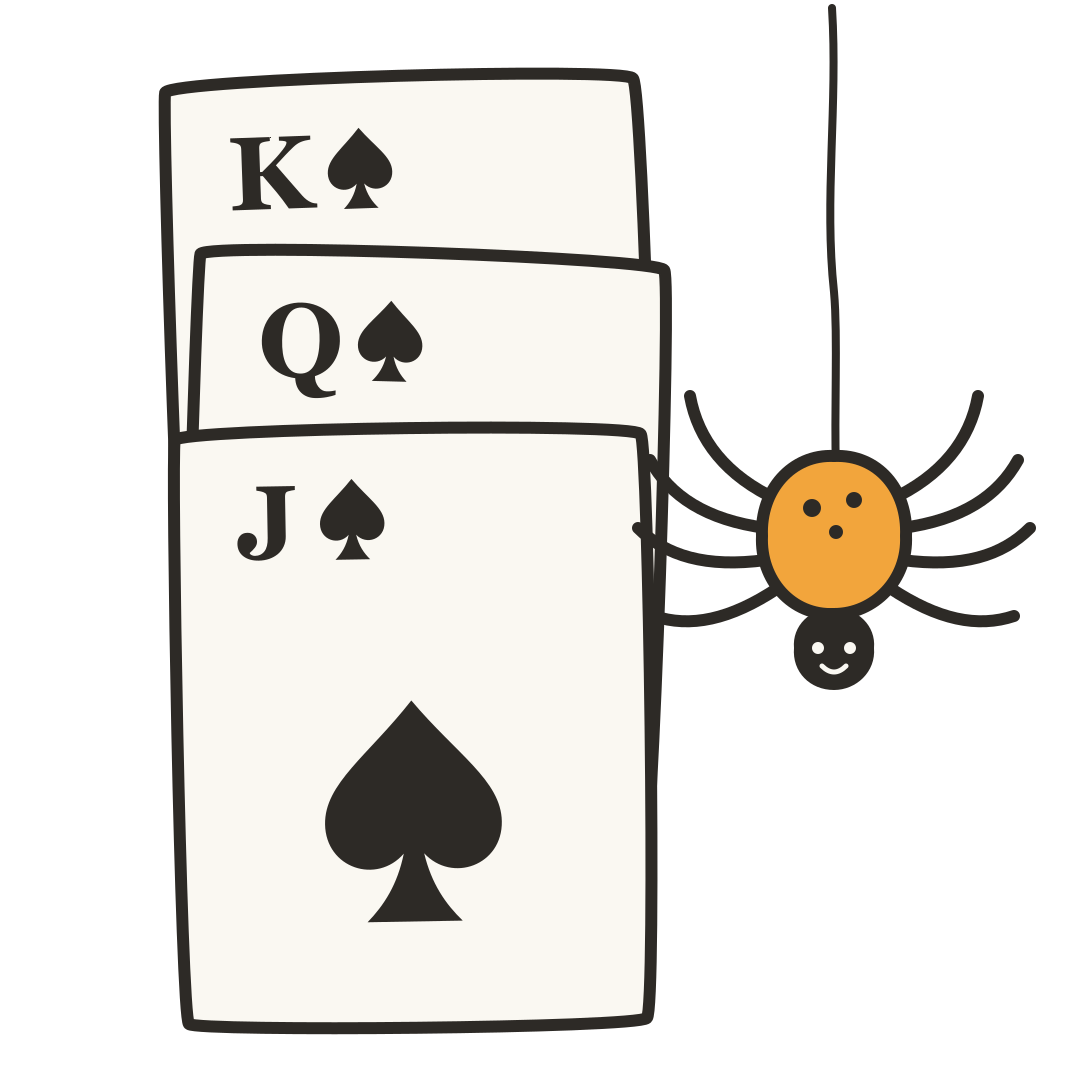
Spider Solitaire
Two suits, 104 cards, eight same-suit sequences to complete. Assemble a full King-to-Ace run and it lifts away. Patience and long plans pay here.
Play free →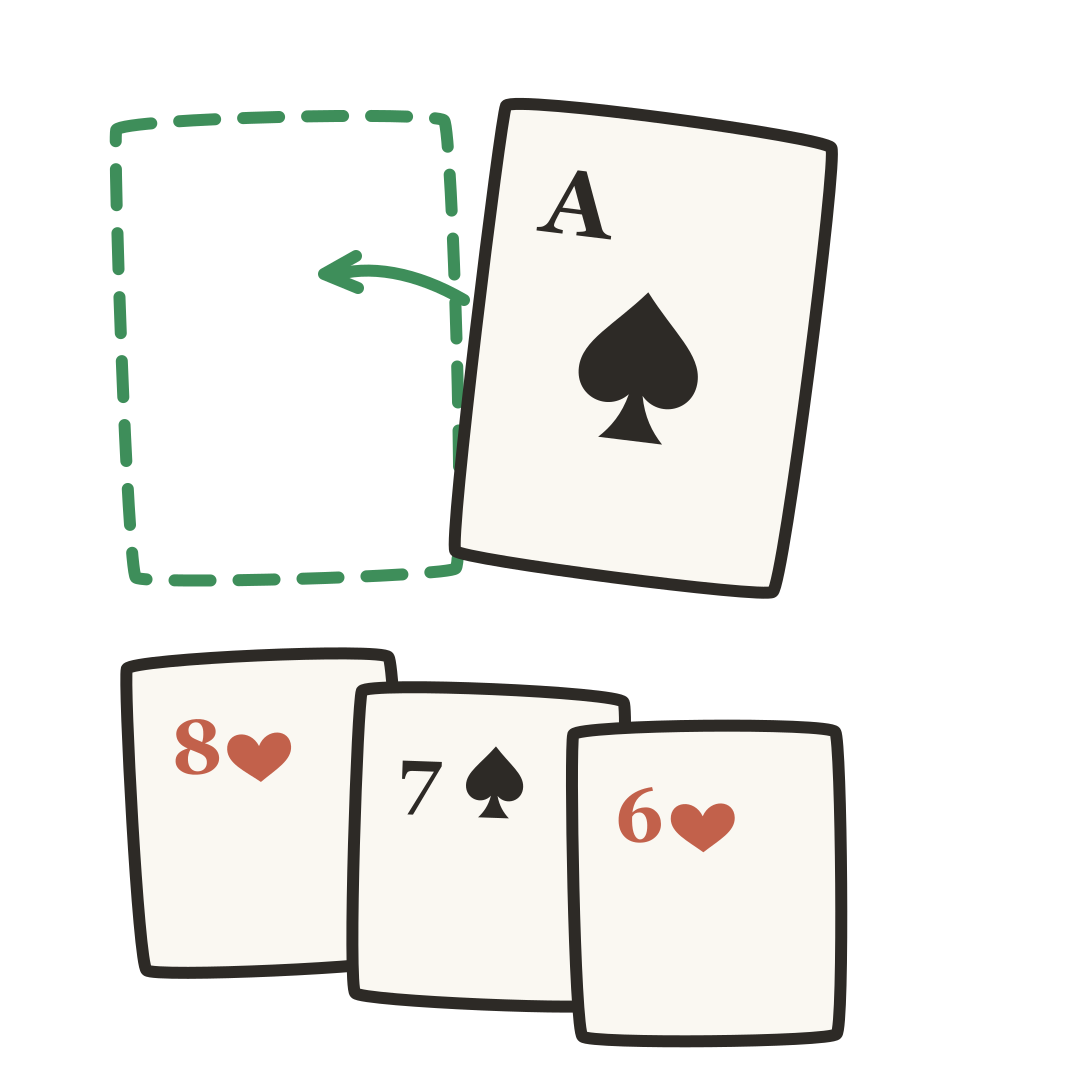
FreeCell Solitaire
All 52 cards face-up from the start: winning is pure planning. Four free cells and unlimited undo, so a wrong turn never has to end the game.
Play free →
The patience family
Solitaire is really one game with several temperaments. A deck gets shuffled into disorder and your job is to put it back, suits rebuilt from Ace to King, under rules that decide how much you're allowed to see and how much you're allowed to move.
Klondike hides most of the deck, which makes every card you uncover a small event. Spider doubles the deck and asks for long, disciplined runs. FreeCell shows you everything at once and turns the whole thing into foresight. Between them you get luck you have to manage, plans you have to commit to, and the moment a tableau finally comes apart in order.
Flavours of patience
Klondike is the familiar rhythm of stock and tableau with hidden cards to uncover. Spider trades suits for scale, building long same-suit runs across ten columns. FreeCell hides nothing and forgives everything with unlimited undo, which makes it the purest planning game here. All three track best times and move counts, and all three work the same way: one deal a day that counts, then as much free play as you want.
When the cards rest
The rest of the site runs on the same terms: logic puzzles, daily word games, original arcade games, and a trivia round.