
Logic puzzles
What logic puzzles offer that almost nothing else does is certainty. A number you place is right, and you know it's right, because you worked it out rather than guessed. One small certainty leads to the next, and eventually the whole grid gives way. It's a quiet way to spend twenty minutes and a surprisingly hard one to stop.

Sudoku
Hard 9×9 puzzles with three mistakes allowed and no candidate crutches. Every cell falls to careful technique, and you are never forced to guess.
Play free →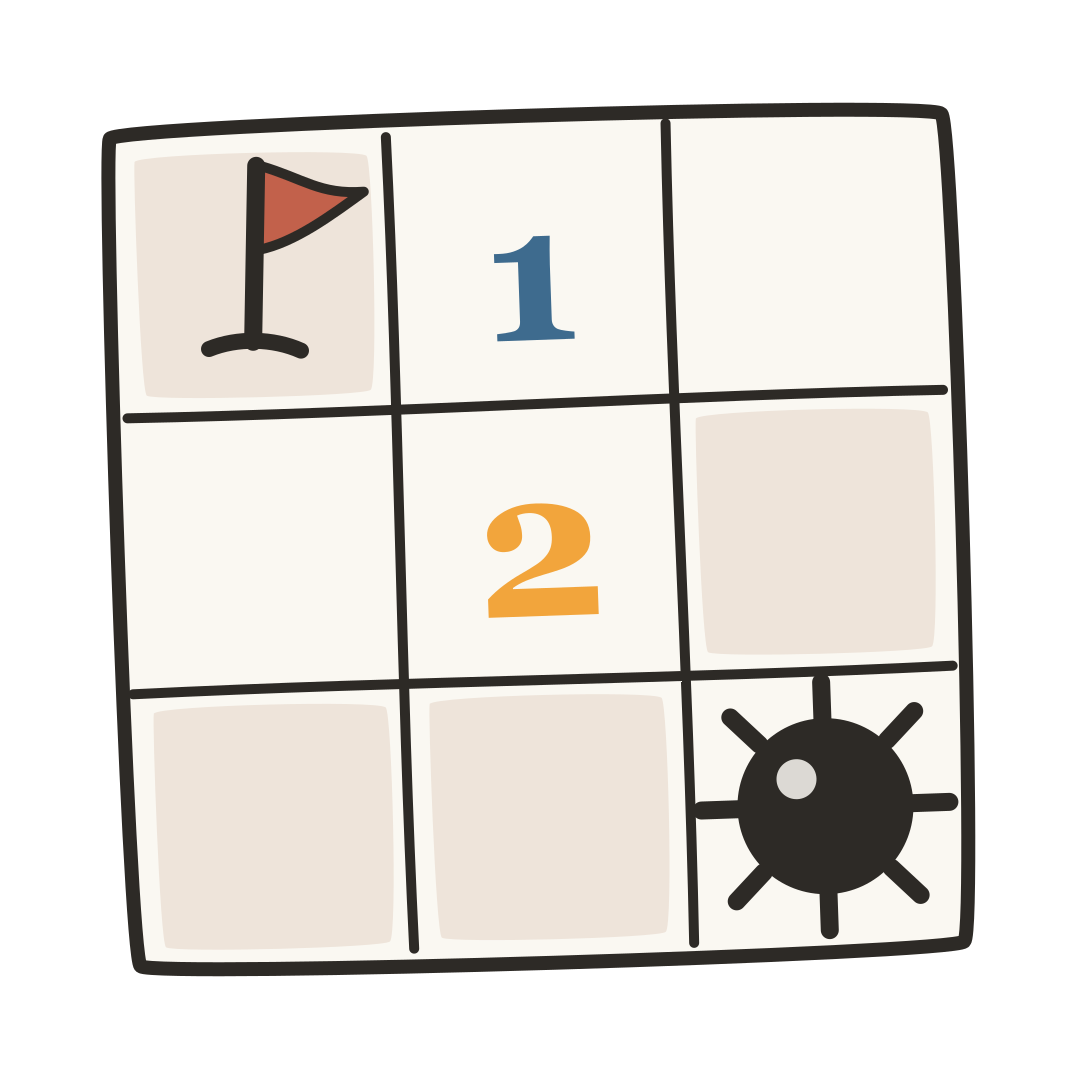
Minesweeper
The classic mine hunt with one promise: no guessing, ever. If you hit a mine, the deduction was there to be found.
Play free →
Chess Puzzles
Positions from real games with a forced winning line to find. No hints and no take-backs. Just the board, your opponent’s last move, and the sequence you have to work out.
Play free →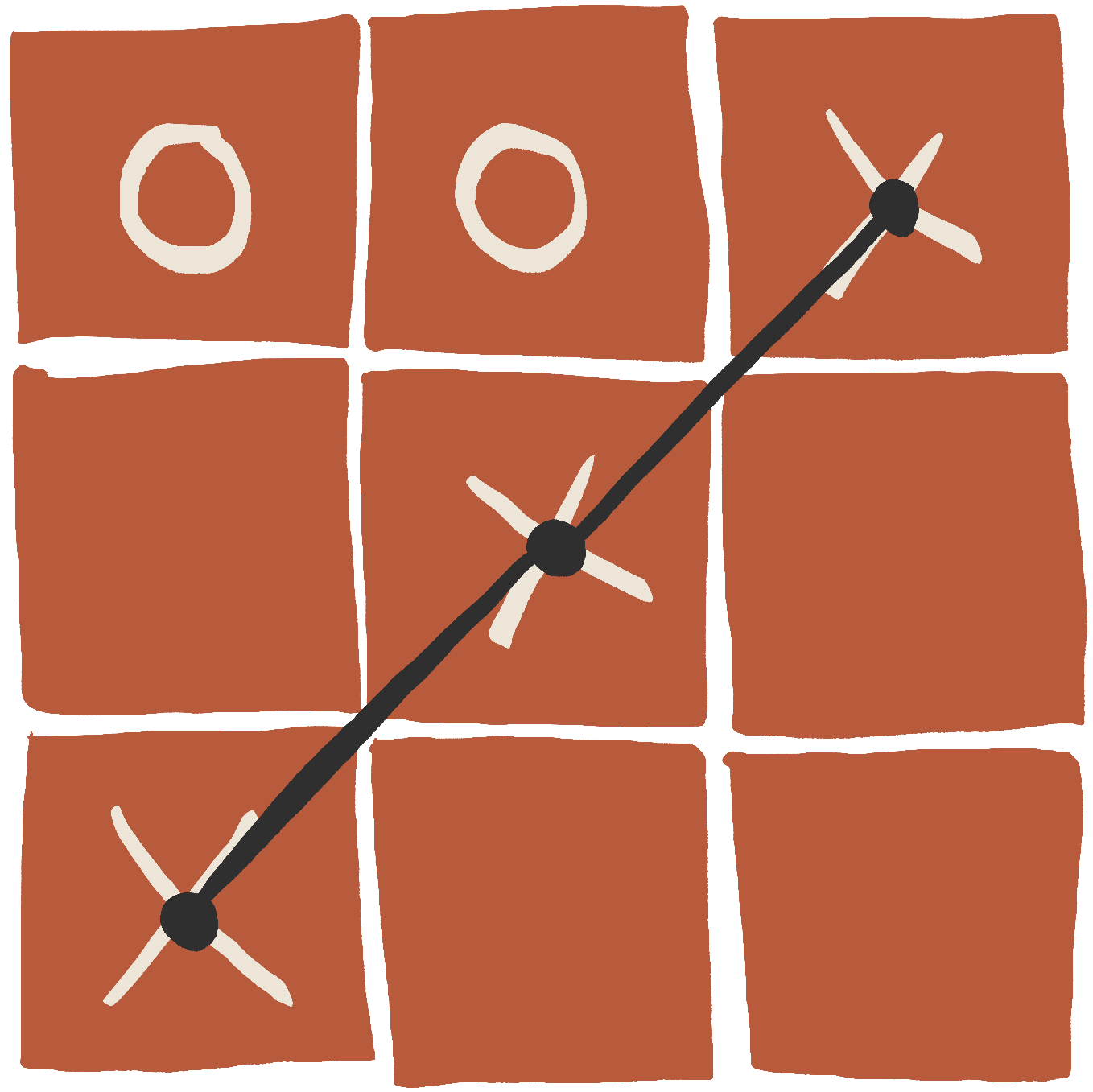
Tic-Tac-Toe Puzzles
Not the childhood game: single-player tactical positions on a larger board where you have to find the move that wins, or forces the draw, against a perfect opponent.
Play free →
The art of deduction
A logic puzzle gives you a handful of facts and one promise: everything you need is already on the board. The craft is in the squeeze. A row that leaves only one home for a number. A count of mines that pins every flag around it. An opponent's threat that cuts your options down to a single move.
None of it involves arithmetic or memorised trivia. What it asks for is patience, attention, and the discipline not to write anything down until you're sure. That's roughly why the genre has outlasted every fashion around it: a newspaper grid from forty years ago wants the same habit of mind as a board built last week.
From arithmetic to tactics
Sudoku and Minesweeper reward careful bookkeeping: constraints, eliminations, the slow squeeze toward certainty. Chess Puzzles and Tic-Tac-Toe Puzzles put an opponent on the other side, so your logic has to survive the best reply rather than just fill a grid. Alternating between the two is the closest thing this site has to a training plan.
Daily puzzles and the archive
Each game deals one puzzle a day toward your streak and the leaderboard, and keeps every past day replayable in its archive. For a different kind of thinking, there are the word games, the card games and the arcade.